

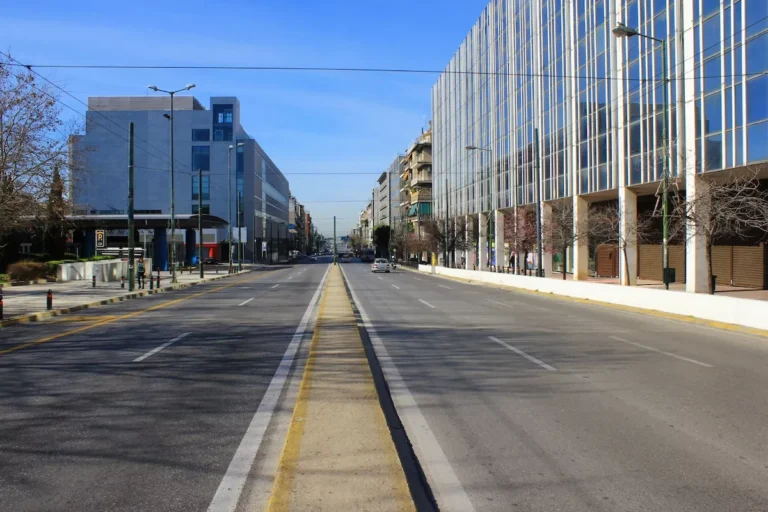
Greece’s commercial real estate market continued its upward trajectory in 2025, fully recovering the losses recorded during the country’s financial crisis and entering a new phase of expansion supported by economic growth, foreign investment and sustained demand for high-quality commercial assets, according to Alpha Bank’s Economic Developments Bulletin.
Prices for premium office buildings and retail properties continued to rise throughout the year, underpinned by steady GDP growth, increasing foreign direct investment into real estate and robust demand for modern commercial space.
The recovery, however, remains uneven across regions and property segments, with Athens significantly outperforming Thessaloniki and the rest of Greece, while retail assets continue to deliver stronger long-term price growth than office properties.
Office prices surpass pre-crisis peak
Data from the Bank of Greece show that prices for premium office properties increased 5.1% in 2025, while premium retail property prices rose 4.8%. Office values have now exceeded their previous 2010 peak by 0.1%, completing a decade-long recovery that began in 2016.
Athens remained the market’s strongest performer, with office prices rising 7% in 2025 and standing approximately 15% above 2010 levels. By comparison, office prices increased 4.2% in Thessaloniki and 2.5% across the rest of Greece, remaining roughly 13.5% below their pre-crisis highs.

The Bank of Greece’s retail property index now stands 10.7% above 2010 levels, with Athens outperforming the national average at 17.7%, while Thessaloniki recorded a 5.3% increase and the rest of Greece posted a modest 0.8% gain.
New construction broadens beyond offices
Office building permits nearly tripled compared with 2019, increasing 38% in 2025. Although the overall construction volume declined due to a higher number of smaller developments, Alpha Bank notes that the comparison is influenced by exceptionally strong activity recorded in 2024.
Retail construction has also strengthened. Building permits for commercial stores recovered after the pandemic, increasing 10% in 2025, while construction volume surged 41%.
Industrial properties have emerged as another major growth segment, with construction volume nearly doubling compared with pre-pandemic levels. Hotel development has likewise remained consistently strong, reflecting the sustained expansion of Greece’s tourism industry.
During the first two months of 2026, commercial construction accelerated further, with new building permits rising 25% by number and 84% by construction volume, driven by retail projects, educational facilities and rental accommodation developments.

Investors shift toward logistics and alternative assets
Alongside offices and retail properties, investor interest is shifting toward logistics facilities, industrial assets, hotels, data centers, and specialized residential segments such as student housing and short-term accommodation.
Quality has become a decisive factor in investment decisions, with investors increasingly prioritizing energy-efficient buildings, premium construction standards and locations offering modern infrastructure.