

Private labels have quietly become the new power player in Greek retail. Roughly one in four, if not more, of the products that end up in Greek shopping baskets today carry a supermarket’s own brand, not the logo of a big FMCG manufacturer.
These are retailer-owned labels, developed, controlled and sold exclusively through supermarket chains, and they are riding a structural shift driven less by changing tastes and more by stagnant purchasing power.
According to Circana’s Panagiotis Boretos, private label already commands a 27.5% share of supermarket sales by value in Greece, yet still has room to grow, as store brands are priced on average about 30% below national brands.
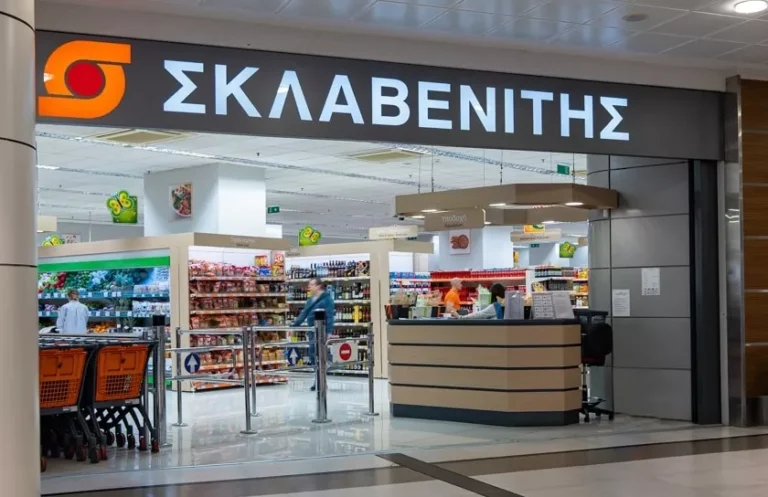
Sklavenitis turns private label into a €1.2 billion business line
Over the past years, Greece’s largest supermarket group Sklavenitis has built one of the most extensive private-label portfolios in the country: 28 distinct brands spanning basic food, household goods, detergents, textiles and even small appliances. Together, these in-house lines generate around €1.2 billion in annual sales, roughly 20% of the group’s total turnover.
28 brands covering almost every corner of the home
Sklavenitis’ store-brand universe now covers nearly every household need. In core food, Marata dominates shelves with pantry staples, pasta, pulses and everyday groceries. Deli meats are sold under Buenas, while confectionery and sweets often carry the Bonora label.
Pet owners meet the Barron brand in pet food aisles, and dairy counters feature labels such as Piesto. The Sklavenitis name itself fronts a wide range of products, from beverages and ice cream to beans and nuts.
In alcoholic drinks, the Rombos brand appears on ouzo and tsipouro, while olive oil is bottled under Anthela. Outside food, cleaning products and detergents sit under Drolio, cosmetics under Sette Elements, kitchen disposables like cling film and foil under Frogo, and grilling and barbecue items under Captain Cook.
Homewares come with the Kitten label, while bedding and linens include names such as Lida, Victoria Collection and Yasemi. The portfolio stretches into apparel with Zedem and Motivo for clothing, Yassou Body for underwear, Cozy Socks for socks and Cozy for slippers.
Sklavenitis also plays in categories rarely associated with supermarkets: office supplies under Stampa and Tickit, party goods under Melody Time, household batteries under Master Energy, lighting under Master Light, kitchen appliances under Margarit and outdoor furniture under My Home & Garden.
Market leader status backed by faster growth
For 2025, consolidated revenues are estimated around €6 billion, up roughly 8% year-on-year, comfortably above the Greek supermarket market’s overall growth rate of about 6.1% recorded by Circana. That outperformance has pushed Sklavenitis’ market share close to 37%.

Internationally, the group has been climbing the rankings in Deloitte’s Global Powers of Retailing report, which tracks the world’s 250 largest retailers. In the 2025 edition, Sklavenitis reached 212th place, improving by 26 spots in a single year.